


Final profiles – for the People section of farmfabricfashion.com
Reporting the business behind the fabric.
The men and women who decide what Pakistan grows, spins, weaves, sews, and sells – the association chiefs who negotiate with government, the mill owners who bet billions on capacity, the cotton voices who read the crop, and the designers building Pakistani fashion into global businesses
From the factory floor of Sadaqat Limited to the Patron-in-Chief’s office at the PTEA, Khurram Mukhtar has become
the man who says – early and in numbers – what Pakistan’s textile exporters are thinking. This autumn, what he is saying is a warning.
Khurram Mukhtar is not an association figure who visits factories; he is a factory man who leads an association. As chief executive of Sadaqat Limited — the Faisalabad-based, vertically integrated maker of home textiles and garments whose roots go back to a Chiniot trading family, and which employs thousands at Khurrianwala — he ships the products whose economics he argues about in Islamabad. That dual identity is the source of his authority: when Mukhtar talks about freight rates or refund delays, buyers and bureaucrats alike know he is describing his own order book. He has run the exporters’ association before — elected PTEA chairman more than once – before moving to the Patron-in-Chief role, the elder-statesman position from which he now fronts the industry’s public case while an elected chairman handles the office.
His message this autumn has been blunt. Pakistan’s textile and clothing exports rose 5.26% in the first quarter of FY27 to $5.026 billion — but Mukhtar warned, from mid-October, that the second quarter is headed for a steep fall. The reasons he cites are operational, not rhetorical: sea freight up one-and-a-half to two-and-a-half times; an Export Facilitation Scheme interest rate promised at 4.5% but charged by banks at 5.5–8.5%; working capital stuck in refund queues; and an energy cross-subsidy that exporters and the Commerce Ministry have been negotiating over — a Rs56 billion figure in talks where the Power Planning & Monitoring Company has acknowledged Rs26 billion. His asks are equally specific. A Drawback of Local Taxes and Levies set at 6–8%, against the revised duty-drawback rates FBR notified on 27 October 2026 — most well under 2% of FOB value. And a Rs140 billion modernisation package to retool an industry whose looms and ginneries are ageing faster than they are being replaced. He has also alleged that around Rs200 billion in EFS financing has flowed to yarn exporters — an allegation the Pakistan Textile Council disputes — making him a central voice in the industry’s internal argument about who the export regime is really for.
Mukhtar’s constituency is the squeezed middle of Pakistan’s textile chain. Faisalabad weaves, processes and stitches: it is where the garment boom of Q1 FY27 (readymade garments up 15.69% in value) meets the fabric decline (cotton cloth exports down 5.34%) and where an estimated 40% of power looms have fallen silent. His long service in the city’s institutions – from the Garment City Company to FESCO’s board – reflects a belief that the
industry is rebuilt city by city, utility by utility, not by federal announcement.
That positioning makes Mukhtar the industry’s negotiator-in-chief in practice: close enough to government to sit in the Commerce Minister’s exporter consultations – including the 21 October 2026 session that ended with recommendations going to the Prime Minister rather than decisions – and independent enough to say publicly when a meeting produces process instead of relief. When the State Bank raised the policy rate to 12% on 26 October,
PTEA’s response – a “severe blow” to exporters – carried his framing of the cost squeeze.
Mukhtar has argued for years that Pakistan’s textile sector, unimpeded, could erase the country’s trade deficit by itself. The test of his patronage will be simpler and harder: whether the Q2 fall he predicts is averted by policy — or documented by it.
Asad Shafi took charge of APTMA in October 2026 with the most precisely priced agenda the association has ever put to the government – and a promise that Pakistan can add $10 billion in textile exports within three years if it is met.
Most association chairmen arrive with a charter of demands. Asad Shafi arrived with three numbers. On taking charge of the All Pakistan Textile Mills Association in October 2026, for a term running to 2028, he set out what has become known as the 7-7-7 formula: industrial electricity at seven US cents per kilowatt-hour, gas at seven dollars per MMBtu, and export financing at seven per cent. Against current industrial tariffs of around 12 cents a unit, the ask is not a plea for subsidy; it is, in APTMA’s framing, a request to be priced like the
competitors Pakistan’s exporters face every day in Dhaka, Delhi and Ho Chi Minh City. Shafi, of Sheikhupura Textile Mills, leads an association whose members anchor the middle of Pakistan’s textile chain — the spinning and weaving capacity on which the garment exporters sit. His election came at a difficult moment: the State Bank had just raised the policy rate to 12%, Faisalabad’s power looms were closing in large numbers, and the industry was publicly divided over the Export Facilitation Scheme.
Shafi’s central claim is specific enough to be tested. Pakistan, he argues, can add $3 billion in textile exports this year and $10 billion within two to three years, if energy, finance and liquidity constraints are addressed. The basis of the claim is structural: Pakistan is one of the few countries in the world with a complete fiber-to-fashion value chain, from its own cotton fields through spinning, weaving, processing and stitching to finished garments and home textiles. More than 80% of the country’s textile exports, he notes, are already value-added consumer products rather than raw or semi-processed goods. That makes his term easy to judge. If the numbers do not move, the 7-7-7 agenda will be remembered as a slogan. If they do, Shafi will have re-established the argument that Pakistan’s export problem is a cost problem, not a capability problem.
Within weeks of taking office, Shafi was leading APTMA’s most contentious campaign: the exclusion of yarns and fabrics — chapters 52 and 55 of the tariff — from the Export Facilitation Scheme. APTMA’s case is that duty-free imports under the scheme are being diverted into the domestic market and misdeclared, undercutting local mills. Its figures are stark: man-made yarn imports under the EFS rose from 3,056 tonnes in the first quarter of FY2024 to 12,773 tonnes in the first quarter of FY2027, with fabric imports rising from 660
tonnes to 8,628 tonnes over the same period. The argument is not one the whole industry accepts. The Pakistan Textile Council disputes the diversion allegations, and the federal government, through the Minister of State for Finance, has said the EFS will be retained with misuse targeted rather than the scheme dismantled. Shafi’s position — that excluding yarn and fabric follows the logic of the earlier exclusion of cotton and cotton yarn — puts the mills’ association in direct negotiation with both the government and parts of its own value chain.
Shafi has also opened a second, more technical front. In a letter to the FBR chairman dated 29 October 2026, APTMA challenged the faceless customs assessment system, citing figures — which it attributes to an FBR review committee — showing average assessment time rising to 40.2 hours from 25.6 hours since the system began, the share of consignments cleared within 48 hours falling to 70% from 84%, and review requests rising to 14% from
6%. The FBR has answered with figures of its own — 20.57 hours and 83% — and says the unit’s relocation to Islamabad is permanent. The dispute is now about which period, and whose numbers, describe the system exporters actually use.
Perhaps the most forward-looking element of Shafi’s agenda is institutional. He has proposed widening APTMA’s membership beyond manufacturers to include Pakistani textile and apparel brands and retailers — a recognition that the industry’s centre of commercial gravity is moving from the mill gate to the brand. Whether an association built by mill owners can speak for brands as well is an open question. That Shafi is asking it at all marks a shift in how the industry organizes itself.
Fawad Anwar chairs the Pakistan Textile Council, the industry’s front door to Brussels and global buyers. His defining deadline isn’t his making: on 31 December 2026, the trade framework that carries most of Pakistan’s exports to Europe expires.
The Pakistan Textile Council is not the industry’s loudest body. It sits across the table from ambassadors, European officials, and the compliance teams of global buyers— in the rooms where market access is decided. Its chairman, Fawad Anwar of Al-Karam Textile Mills, therefore holds a different kind of industry office: less about negotiating tariffs in Islamabad, more about persuading the outside world that Pakistan’s factories meet the standards on which its preferential access depends. Anwar runs one of Karachi’s large vertically integrated exporters while chairing the council — the same combination of operator and interlocutor that gives his interventions weight with foreign counterparts. When the European Union’s Ambassador to Pakistan,
Raimundas Karoblis, met the council in Karachi on 21–22 October 2026, it was Anwar’s table he sat at.
The substance of that meeting defines Anwar’s chairmanship. Roughly 89% of Pakistan’s textile exports to the European Union enter under GSP+ preferences. The European Commission’s assessment puts GSP+-eligible exports at about €7.5 billion in 2024, with tariff exemptions worth approximately €732 million a year. The current framework expires on 31 December 2026. Under the revised scheme, the conventions Pakistan must implement rise from 27 to 32, and transitional arrangements run from January 2027 to the end of 2028. The ambassador’s message, as reported from the Karachi meeting, was precise: renewal will depend on measurable implementation of those conventions, not on the passage of new laws. For Anwar, that converts an abstract trade negotiation into a factory-floor and ministry-by-ministry checklist — labour rights, environmental compliance, governance — with a date attached. It is why the council’s work increasingly resembles an audit: evidence, timelines, verification.
Complicating the renewal is a second European file. The EU–India free trade agreement, concluded on 27 January 2026 though not yet in force, would progressively remove India’s tariff disadvantage in the European market. Research cited by the Pakistan Institute of Development Economics puts Pakistan’s preferential edge at roughly 9 to 12 percentage points — the margin GSP+ currently provides over the terms India trades on. If that margin narrows while Pakistan’s own scheme is being renegotiated, the competitive map of South Asian apparel in Europe changes fundamentally. Anwar’s council is the body expected to quantify that threat for the government and to argue Pakistan’s case in Brussels before the two files converge.
The council also plays a distinct role in the industry’s internal arguments. In the dispute over the Export Facilitation Scheme, where APTMA has alleged large-scale diversion of duty-free yarn and fabric imports into the domestic market, the PTC has taken the other side of the evidence: in a letter to the Prime Minister dated 13 October 2026, it disputed the diversion allegations. That positioning matters. It makes the council the counterweight in a debate that will shape the cost of inputs for every garment exporter in the country — and it
means Anwar must defend the industry’s unity in public while its associations argue in detail.
Anwar’s longer project is visible in the pattern of his engagements: persuade buyers and regulators that Pakistani compliance is a reason to source more, not a risk to manage down. Hugo Boss’s decision, announced in October 2026, to rejoin the Pakistan Accord from January 2027 — after inspections at linked factories had found blocked exits and unsafe evacuation routes — is the kind of outcome the council points to: scrutiny that ends in
continued engagement rather than exit. Whether Pakistan’s factories can generate that outcome at scale, before the GSP+ clock runs out, is the question his chairmanship will be judged by.
Gohar Ejaz has argued Pakistan’s textile case as APTMA’s Patron-in-Chief and, in the caretaker government of 2023–24, decided parts of it as Commerce Minister. Nobody in the industry knows better why the two sides so rarely agree — because he has been both of them.
Gohar Ejaz’s authority in textiles was built inside APTMA over two decades. He served as the association’s Punjab chairman in 2009–10 and its national chairman in 2010–11, and afterwards retained the Patron-in-Chief role — the position from which APTMA’s group leadership, rather than its rotating office-bearers alone, speaks to government. He was in that role at APTMA’s annual general meeting in October 2026, in a season when the association was simultaneously fighting on energy tariffs, customs assessment and the Export Facilitation Scheme. The record APTMA attaches to his era is specific. The association credits the leadership period in which he was its central figure with textile exports rising from $13 billion in FY18 to $19.4 billion in FY22 — growth of more than 50 per cent across four years that included a pandemic, a global supply-chain shock and a domestic change of government. Whatever share of that rise belongs to policy, prices or post-Covid demand, it is the benchmark his supporters cite, and the one his critics measure the subsequent fall from the FY22 peak against. Alongside the association work sits a business empire of a different kind. As chairman of the Ejaz Group, his best-known asset is Lake City in Lahore, one of the country’s largest private real-estate developments — a reminder that, like several of his contemporaries in this section, his fortune is no longer hostage to the cotton crop alone.
In August 2023, Ejaz crossed the table. Appointed caretaker Federal Minister for Commerce, Industries & Production, he spent roughly seven months inside the government he had spent years lobbying — and, for a brief period in early 2024, also held the Interior portfolio. The caretaker role is constitutionally limited, but commerce is where textile policy lives: trade negotiations, export promotion and the industry’s running argument with the finance and power ministries all pass across that desk. The experience left him, by his subsequent public statements, unconverted. Ejaz emerged from government making substantially the same argument he had made going in — which is itself a finding about Pakistani economic policymaking. If a minister drawn directly from the industry’s leadership, sympathetic to its case and fluent in its numbers, could not durably move the energy and tax settings the industry complains about, the obstacle is probably structural: a power sector and a fiscal position that no single ministry controls.
That argument has one sentence at its center, repeated in statement after statement: industry cannot carry the power sector’s burden any more. Industrial consumers in Pakistan, Ejaz points out, pay electricity tariffs of around 12 US cents per kilowatt-hour, against roughly 9 cents or less for competitors in the region — a gap he says is now costing Pakistan export orders outright; at the moment, buyers can choose among Bangladesh, Vietnam, India and a recovering China. The government answers with numbers of its own, and a fair account has to carry both. The Power Division states that the industrial cross-subsidy burden has been reduced since March 2024 from Rs225 billion (Rs8.9 per unit) to Rs102 billion (Rs4.02 per unit). Both things can be true at once: the subsidy load can be falling, and the tariff that remains can still be uncompetitive. Much of Pakistan’s energy debate lives in exactly that gap — between a government measuring progress against its own past and an industry measuring itself against its competitors’ present. Ejaz now works the seam between business and policy from several chairs at once: he heads an Economic Policy & Business Development think tank and chairs FPCCI business policy bodies, including its anomaly committee work with the FBR. The roles suit the post-ministerial version of the man — less a lobbyist for one association than a standing committee of one on why Pakistan’s industry underperforms its potential.
Ejaz’s test is the one he set himself in office and out of it: an industrial tariff close enough to the regional benchmark that Pakistani mills win orders on quality and delivery rather than losing them on the electricity bill. The FY22 export peak of $19.4 billion happened, on his account, when energy pricing briefly favored industry. Whether Pakistan returns to that setting — and whether he is in an association office, a think tank, or a ministry when it does — his name will be attached to the argument either way.
Chairmen make APTMA’s demands; Shahid Sattar, its Secretary General, builds them — tariff by tariff, annexure by
annexure. A former Member (Energy) at the Planning Commission, he is the technocrat who turned the industry’s oldest complaint, the electricity bill, into its most detailed case.
Every trade association has two kinds of leaders: the industrialists who own the factories, and the professional who knows where the bodies are buried in the tariff schedule. At APTMA, Shahid Sattar is the second kind — and, on most working days, the more consequential one. His background is the state itself: before APTMA, he served as Member (Energy) at the Planning Commission, the federal body where Pakistan’s power-sector plans are made. He therefore argues about electricity pricing with the people who set it, in the technical language they themselves use, about decisions some of them took while he was in the room.
That biography explains APTMA’s current style under its new chairman Asad Shafi. The association’s demands arrive not as press-release adjectives but as worked positions: a tariff proposed to the cent, a subsidy quantified to the rupee, a regulatory mechanism cited by name. Sattar is the drafter-in-chief of that approach, and the named author or signatory behind many of the letters through which APTMA conducts its real business with ministries, regulators and state utilities.
The centerpiece is electricity. Pakistan’s industrial tariff, APTMA’s analysis holds, ran at about 12 US cents per kilowatt-hour in FY26, against the 9 cents industry says it was promised — and against roughly 5 to 9 cents in the countries Pakistan competes with for orders. Inside that gap, Sattar’s case isolates a single number: a cross-subsidy of Rs131 billion loaded onto industrial consumers, adding about Rs6.5 per unit to their bills. Remove it in the tariff rebasing, he argues, and the industrial rate falls toward 9 cents, grid demand recovers instead of fleeing to captive generation, and export competitiveness is restored at no cost to the exchequer’s stated subsidy policy — because, on his reading, industry was never supposed to be the subsidy’s payer.
The second front is the market mechanism meant to let industry buy power competitively. The Competitive Trading Bilateral Contract Market, in APTMA’s submission, remains unviable in practice: wheeling charges are inflated, hybrid-consumption arrangements are penalized, and an 800 MW cap restricts the market to a scale too small to discipline prices. It is characteristic Sattar territory — an argument won or lost not in a headline but in the
design details of a market rulebook.
Energy is the signature, not the whole portfolio. When SNGPL raised retroactive RLNG actualization charges covering 2015 to 2022 — bills running, by APTMA’s account, into hundreds of millions of rupees for individual units — it was Sattar’s office that wrote to the utility and set out APTMA’s decision to engage its own independent audit firm to verify the charges. When the tax treatment of domestic cotton became a fight over the Export Facilitation Scheme, his submissions argued the level-playing-field case: an 18 per cent sales tax burden on local cotton and inputs, set against duty-free imported equivalents, taxes Pakistan’s own farm-to-fabric chain for existing.
And the brief is widening from price to proof. The European Union’s Digital Product Passport becomes mandatory in 2027, requiring traceability across the textile value chain from fibre to finished garment. APTMA, in Sattar’s advocacy, has called for a unified national traceability platform under the National Compliance Centre — an acknowledgement that the next competitiveness battle will be fought on data about a product’s origins, not only on its cost. The same instinct showed in October 2026’s customs dispute, when APTMA’s letter to the FBR chairman set out measured clearance times under the faceless assessment system — figures the FBR publicly contested with its own. In that exchange, both sides were, in effect, arguing in Sattar’s language: hours, percentages, and periods.
It is tempting to treat association secretaries as background staff. In Pakistan’s textile politics, that is a misreading. Chairmen serve two-year terms and speak for their own mills as well as the industry’s; the Secretary General’s office carries the institutional memory, the datasets, and the drafting pen across all of them. When the December rebasing is decided, when the RLNG audit reports, when the traceability platform is designed or delayed, the outcome will have been shaped in submissions Sattar’s office wrote. Farm Fabric Fashion’s readers will rarely see his photograph. They live with his arithmetic.
Success, on his own framework, is unusually checkable: an industrial tariff rebased to 9 cents; a cross-subsidy visibly removed rather than renamed; a bilateral power market whose cap and wheeling charges let factories actually buy cheaper electricity; and a traceability system ready before the EU’s 2027 deadline rather than after it. Sattar’s career bet is that Pakistani industry loses less often on the factory floor than in the fine print. His job is to be the industry’s best reader of fine print.
In 1992, Musadaq Zulqarnain started a hosiery company in Faisalabad with ten Italian knitting machines. Interloop is now one of the world’s largest hosiery manufacturers, Pakistan’s largest listed apparel company — and the industry’s leading argument that scale and sustainability can be sold together.
The founding story of Interloop is told often in Faisalabad because it is so measurable. In 1992, Musadaq Zulqarnain and his brother Navid Fazil started with ten computerised sock-knitting machines imported from Italy and an initial investment of about Rs9.35 million. Zulqarnain was a mechanical engineer from the University of Engineering and Technology, Lahore — which later awarded him an honorary doctorate — who had spent fourteen years in senior roles at a major gas transmission company before becoming an entrepreneur. The discipline shows in how the company is described by those who study it: process-led, systems-driven, built to satisfy the audit regimes of the world’s most demanding sportswear brands.
From that start, Interloop grew into one of the world’s largest hosiery manufacturers and then beyond hosiery altogether — into denim, knitted apparel and seamless activewear — supplying Nike, Adidas, H&M, Puma, Levi’s, Uniqlo, Target and Gymshark. It was listed on the Pakistan Stock Exchange in 2019, and is described in company materials as the largest apparel company on the exchange and the only Pakistani textile company on the main
MSCI Frontier Markets index.
The numbers from the current year explain why Zulqarnain’s model attracts attention beyond Faisalabad. In the first quarter of FY27, while much of the industry was warning about closures and an export downturn, Interloop’s profit rose 54% to Rs4.23 billion, and the company committed around Rs6.5 billion to expansion capital expenditure. In an industry debating whether Pakistan can compete on cost at all, Interloop’s answer has been to compete on reliability, compliance and product range — the attributes global brands cannot source from a spreadsheet.
That is also why Zulqarnain sits in rooms most mill owners do not. He is a member of the Prime Minister’s Economic Advisory Council and vice-chairman of the Pakistan Textile Council, the body that interfaces with the European Union and international buyers — positions that reflect his standing as the industry’s most internationally legible exporter.
Interloop’s public identity is inseparable from sustainability, and Zulqarnain has made it a commercial strategy rather than a reporting exercise. The company is a partner in Fashion for Good’s circularity work, including the Cotton Reloop programme on recycling cotton waste back into production, and it presents its welfare and environmental programmes — and Zulqarnain’s own association with The Citizens Foundation’s education work — as part of the same proposition: a supplier that global brands can defend to their own boards and
customers.
In a market where EU buyers are preparing for the Digital Product Passport and due diligence requirements that will apply from 2027, that positioning is becoming a trade asset. The question for the rest of the industry is whether Interloop’s model is replicable at a smaller scale, or whether it marks a widening gap between Pakistan’s top tier of exporters and everyone else.
Zulqarnain belongs to the faction of the industry that still believes in building. While associations argue over tariffs and schemes, Interloop keeps adding capacity — in hosiery, in denim, in activewear — and keeps reporting the results in quarterly filings that analysts can test. His chairmanship, now spanning more than three decades, is therefore a standing counter-argument to the narrative of an industry in retreat. The factories are in Faisalabad, the customers are the biggest names in global sportswear, and the model, quarter after quarter, is in the published accounts.
The focus, in his terms (as stated publicly)
Zaki Bashir leads Gul Ahmed through the hardest year in its recent history — a Rs339 million loss, a shrinking order book, and an industry turning against its own cost base. His answer is a consolidation: fewer sites, its own power, higher margins, and land at Nooriabad.
Few chief executives in Pakistani textiles have taken a set of annual results like Gul Ahmed’s FY26 to shareholders. The group closed the year to 30 June 2026 with a consolidated net loss of Rs339 million, against a profit of Rs4.45 billion the year before. Revenue fell 6.3% to Rs162.01 billion, gross profit dropped by a quarter, and operating profit fell 62% to Rs5.24 billion. Standalone, the mills lost Rs923 million.
Management’s explanation, as presented throughout the year, is a catalogue of the industry’s pressures in one company: the exit from Export Apparel, spinning capacity idle until March 2026, cheaper imported yarn undercutting domestic production, flood disruption, high energy costs, high interest rates, and refund delays. Zaki Bashir’s task — and the reason his leadership is a story in itself — is that none of those explanations is a strategy. The strategy is what the group has done since.
The centre of the response is geography. Gul Ahmed is consolidating at the SITE industrial area in Nooriabad, Jamshoro. In a disclosure to the Pakistan Stock Exchange dated October 2026, following a board meeting on 24 October, the company confirmed it had completed the acquisition of Plot A-44 at SITE Nooriabad, including land, building, plant and machinery. In the same disclosure, the board approved the acquisition of five further plots
totalling 43.75 acres — B-80A (12 acres), B-153 (18 acres), B-236 (4 acres), A-473 (8 acres) and B-268 (1.75 acres) — subject to due diligence and formalities.
The distinction matters, and Bashir’s communications have kept it: one plot is acquired; five are approved intentions. Together they describe a group concentrating production on a single site where it can control its utilities, its logistics, and its expansion land — a physical version of the simplification the income statement is demanding.
The second leg is energy. The same October board approvals covered a self-generation package: a 7.5 MW Goldwind wind turbine, contracted through Orient Energy Systems; solar capacity of up to 6 MW, using JinkoSolar panels with local works by A2Z Energy Systems; and a 20 MWh Sungrow battery storage system. No combined capital cost was disclosed, and the group has not published a payback figure — one of the numbers the market will press for.
The logic is industry-wide: with grid tariffs around 12 cents a unit and gas supply uncertain, a mill that generates a growing share of its own power converts an uncontrollable cost into a capital decision. For Gul Ahmed, whose finance costs were Rs5.61 billion in FY26 even after falling nearly 24%, that conversion is central to the turnaround case Bashir must make to lenders and shareholders alike.
The first test of the strategy came quickly. In the first quarter of FY27, filed in October 2026, Gul Ahmed’s profit after tax rose 108.2% to Rs639.52 million, with earnings per share of Rs0.86 — even as sales fell 15.65% to Rs41.14 billion. Gross profit held nearly level, other income more than doubled, administrative costs fell 22%, and finance costs declined. It was, in short, profit returning without sales recovering: the profile of a company managing its cost base harder than its market is growing.
At the annual general meeting on 27 October 2026, shareholders approved the FY26 audited statements, re-appointed Yousuf Adil as auditors and ratified the related-party transactions — a formal vote of confidence in the direction, if not yet in the destination. Bashir’s second year of the turnaround will be judged on the harder half of the equation: whether the consolidated, self-powered, higher-margin Gul Ahmed can grow its order book again.
Ziad Bashir built Ideas into one of Pakistan’s largest retail chains from inside one of its oldest textile groups — and now chairs the Pakistan Business Council. He is the rare industry figure who has to think about the bale, the brand, and the shopping basket in the same week
Most Pakistani textile groups treat retail as the last step of the factory. Ziad Bashir treated it as a business in its own right. As founder of Ideas by Gul Ahmed, the retail arm of Gul Ahmed Textile Mills, he built the mill’s name into a high-street and mall presence that now ranks among the largest formal retail chains in the country. That matters for more than branding. A group that sells to its own customers at home is less exposed to a single export market, a single buyer’s season, or a single exchange-rate swing than a group that ships
everything abroad — and it learns, daily and directly, what Pakistani consumers will actually pay for.
The model cuts both ways, and that is what makes Bashir an interesting figure rather than simply a successful one. Retail margins depend on documented sales, rented space, card payments and consumer confidence. The factory’s economics depend on energy tariffs, cotton, and export finance. Bashir operates where those two cost structures meet.
In early 2026, Bashir was elected Chairman of the Pakistan Business Council for an eighteen-month term, succeeding to a role he had prepared for as the Council’s Vice Chairman since February 2025. The PBC is not a trade association for one sector: it is an advocacy platform of around 102 of the country’s largest companies, which by the Council’s own account together account for roughly 40 per cent of national exports. Its agenda — tax reform, energy pricing, documentation of the economy, export competitiveness — is the agenda of Pakistan’s formal private sector as a whole.
Bashir arrives at that table with two additional seats. He is a member of the Prime Minister’s Economic Advisory Council, and he is the founding chairman of the Pakistan Retail Business Council, the body he set up to give the formal retail sector organized representation in policymaking. Retail had long been the missing voice in Pakistan’s business politics: large in employment and visibility, fragmented in argument. Bashir’s retail council was an attempt to fix that.
He took on these roles at a demanding moment for his own group. Gul Ahmed closed FY26 with a consolidated net loss of Rs339 million, against a profit of Rs4.45 billion the year before, as the group absorbed the costs of restructuring, an exit from export apparel, idle spinning capacity and cheaper imported yarn. The group, led day to day by his brother, Chief Executive Mohammed Zaki Bashir, has responded with consolidation — including expansion at Nooriabad — and investment in its own renewable power.
That backdrop sharpens the question Bashir’s career poses. If even a group with Gul Ahmed’s scale, brands and balance sheet can be squeezed by energy costs and import competition, then the case he makes at the Business Council is not abstract. It is a description of his own profit-and-loss account.
The argument Bashir is best placed to make — and the one Farm Fabric Fashion will test — is that Pakistan’s textile future is not only an export story. Formal retail is where the documented economy is built: sales tax is collected, rents and wages are recorded, and a mill’s fabric becomes a Pakistani brand rather than another country’s label. His policy focus follows from that position. Formal retailers argue that they compete against undocumented sellers on an uneven field, carrying tax and compliance costs their informal rivals avoid, and that policy too often penalises the documented instead of widening the net.
It is the domestic mirror of the exporters’ complaint. At the border, Pakistani mills say they compete against better-supported rivals abroad. On the high street, Pakistani chains say they compete against an untaxed economy at home. Bashir is one of the few business leaders who can describe both contests from personal experience
Success for Bashir’s term at the Business Council would be measurable in things that do not make speeches: a broader tax base that lowers the burden on documented companies, energy pricing that a mill and a mall can both plan around, and a retail sector treated by policymakers as part of the industrial economy rather than an afterthought to it. Success at home would be simpler still — Ideas growing on the strength of Pakistani demand, while the group behind it returns to the profitability its history suggests it expects of itself.
He took over a family textile business in 1968 and built it into a conglomerate spanning mills, a bank, cement, power, and retail. Nearly six decades on, Mian Muhammad Mansha remains the figure every Pakistani industrial strategy has to reckon with — usually in the room, as he was when Punjab launched its Rs2 trillion PIVOT Plan.
The Nishat story begins before Pakistan had settled its own borders. Mansha’s father, Mian Muhammad Yahya, and his brothers migrated from Calcutta after Partition and founded Nishat Mills in 1951, building on a family background in textiles. When Yahya died, his son returned to the business in 1968 and took charge of an enterprise that was substantial by the standards of the day — and exposed, like every Pakistani industrial house of that era, to politics as much as to markets.
What followed is the defining pattern of Mansha’s career: expansion in textiles first, then deliberate diversification beyond them. In 1979 he established a complex of seven factories at Nishatabad, near Faisalabad, which became Pakistan’s largest textile complex. Spinning, weaving, dyeing, finishing and garments were gathered into an integrated whole at Nishat Mills — the model the rest of the industry would spend decades copying, at scales most could not match.
The move that changed the group’s character came with privatisation. In the 1991–92 sell-off, Mansha acquired MCB Bank, which under Nishat’s ownership became one of Pakistan’s most profitable private banks. Banking gave the group something textiles never could: a financial engine whose fortunes did not move with the cotton crop or the European order season.
From that base, the group spread. Today Nishat spans textiles through Nishat Mills, Nishat Chunian and the Nishat Linen retail chain; cement through DG Khan Cement; power generation; insurance; hospitality; paper products; and an automotive venture assembling Hyundai vehicles in Pakistan. Mansha, who also served as chairman of APTMA, was awarded the Sitara-e-Imtiaz in 2004 and is routinely counted among Pakistan’s wealthiest individuals and its highest taxpayers. The diversification was not empire-building for its own sake. It was insurance — against the energy crises, cotton failures and policy reversals that have broken single-industry textile houses again and again.
For Farm Fabric Fashion’s purposes, the point is that textiles never became a legacy business to be managed for cash. They remain the group’s foundation and its largest industrial identity, and the operating companies still perform like it. In the first quarter of FY27, Nishat Mills’ standalone earnings reached PKR 1.6 billion — PKR 4.5 per share, roughly double the year before — on revenue up 16 per cent year on year to PKR 52.4 billion, with gross margin improving to 12.1 per cent from 11.0 per cent. Nishat Chunian, the group’s other listed textile arm, more than trebled its profit after tax to Rs1.73 billion in the same quarter.
Those results landed in a quarter when much of the industry was warning about energy tariffs, a 12 per cent policy rate and soft fabric demand. The contrast is instructive: scale, integration and a balance sheet built across sectors do not repeal Pakistan’s cost problems, but they change who can absorb them, invest through them, and wait for the cycle to turn.
Mansha’s influence today is as much institutional as commercial. When Punjab launched its PIVOT Plan in Lahore on 30 October 2026 — a three-year, roughly Rs2 trillion strategy that names textiles and garments as a priority value chain — Mansha was among the industrialists present. Governments launching export strategies need the country’s largest employers in the photograph and, more importantly, in the investment pipeline that follows. Mansha’s presence signals that the plan has been heard by the house most capable of acting on it.
He has also seen every previous version of such plans. Nationalisation in the 1970s, privatisation in the 1990s, energy crises in the 2000s, and successive export packages since — Mansha has operated through all of them, and his public interventions over the years have tended to return to the same themes: consistent policy, competitive energy, and a state that treats its largest taxpayers as partners rather than as a revenue target.
For a man who has already built the conglomerate, success now looks like continuity: professional management deepening across the group, the next generation’s roles settled, and Nishat’s textile core modernised for a market that demands traceability, renewable energy and compliance alongside price. His career poses the question the rest of this People section keeps circling: is Pakistan’s textile future a story of giant integrated groups like Nishat pulling away — or of the policies that might let smaller firms survive alongside them?
Every textile story in Pakistan begins with a bale of cotton — and with an argument about how many bales there really are. Ihsanul Haq, chairman of the Cotton Ginners Forum, is the man who has that argument in public, fortnight after fortnight.

The Exporters' Voice
From the factory floor of Sadaqat Limited to the Patron-in-Chief’s office at the PTEA, Khurram Mukhtar has become the man who says – early and numbers what Pakistan’s textile exporters are thinking. This autumn, what he is saying is a warning.


The 7-7-7 Chairman
Asad Shafi took charge of APTMA in October 2026 with the most precisely priced agenda the association has ever put to the government – and a promise that Pakistan can add $10 billion in textile exports within three years if it is met

The Man on the GSP+ Clock
Fawad Anwar chairs the Pakistan Textile Council, the industry’s front door to Brussels and global buyers. His defining deadline isn’t his making: on 31 December 2026, the trade framework that carries most of Pakistan’s exports to Europe expires.

Both Sides of the Table
Gohar Ejaz has argued Pakistan’s textile case as APTMA’s Patron-in-Chief and, in the 2023–24 caretaker government, decided parts of it as Commerce Minister. Nobody in the industry knows better why the two sides so rarely agree – because he has been both of them

The Man With the Numbers
Chairmen make APTMA’s demands; Shahid Sattar, its Secretary General, builds them – tariff by tariff, annexure by annexure. A former Member (Energy) at the Planning Commission, he is the technocrat who turned the industry’s oldest complaint, the electricity bill, into its most detailed case.
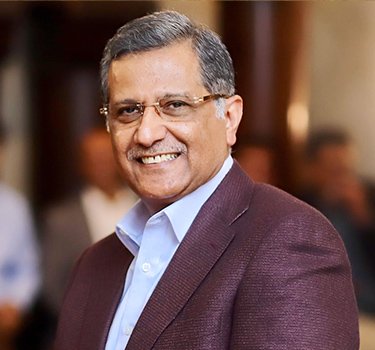
The Engineer Who Scaled Socks Into a Global Apparel Group
In 1992, Musadaq Zulqarnain started a hosiery company in Faisalabad with ten Italian knitting machines. Interloop is now one of the world’s largest hosiery manufacturers, Pakistan’s largest listed apparel company — and the industry’s leading argument that scale and sustainability can be sold together.

The Turnaround Chief Executive
Zaki Bashir leads Gul Ahmed through the hardest year in its recent history — a Rs339 million loss, a shrinking order book and an industry turning against its own cost base. His answer is a consolidation: fewer sites, his own power, higher margins, and land at Nooriabad.

The Factory Meets the Shop Floor
Ziad Bashir built Ideas into one of Pakistan’s largest retail chains from inside one of its oldest textile groups — and now chairs the Pakistan Business Council. He is the rare industry figure who has to think about the bale, the brand and the shopping basket in the same week.
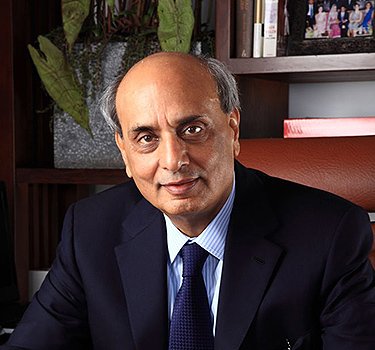
The Long View
He took over a family textile business in 1968 and built it into a conglomerate spanning mills, a bank, cement, power and retail. Nearly six decades on, Mian Muhammad Mansha remains the figure every Pakistani industrial strategy has to reckon with — usually in the room, as he was when Punjab launched its Rs2 trillion PIVOT Plan.

The Cotton Belt's Watchdog
Every textile story in Pakistan begins with a bale of cotton — and with an argument about how many bales there really are. Ihsanul Haq, chairman of the Cotton Ginners Forum, is the man who has that argument in public, fortnight after fortnight
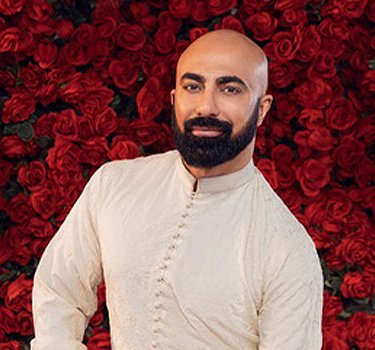
The Showman at Fashion's Checkout
For more than two decades HSY has sold Pakistani fashion as spectacle — choreographing its biggest nights as well as designing for them. As Event Director of LAAM Fashion Week, he is now fronting a harder proposition: that a fashion week should be judged not by its applause, but by its sales.

The Bridal Exporter
Faraz Manan built Pakistan’s most internationally recognised luxury label on the oldest economics in fashion — the wedding. Two decades on, his embellished bridal and formal wear sells across Pakistan, the Gulf and the diaspora, and in 2024 made him the first Pakistani designer named to the Business of Fashion’s BoF 500.

The Craft Streetwear Exporter
Zain Ahmad started Rastah as a student project in Vancouver. Eight years later the Lahore label sells handloom and block-printed streetwear to customers — and celebrities — on three continents, turned a profit on $2.2 million of revenue without a rupee of outside investment, and in October 2026 put its founder in the BoF 500.
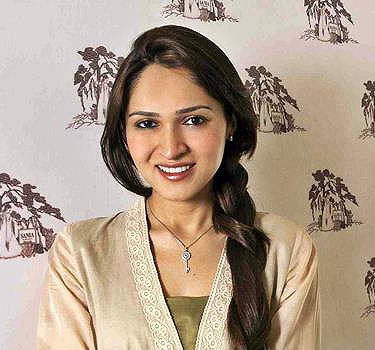
The Fifteen-Year House
Sania Maskatiya founded her label in 2010 and has outlasted every cycle Pakistani fashion retail has thrown at it since — platform wars, currency shocks, a pandemic and the pivot to e-commerce. Her house is the case study in what longevity in luxury prêt actually requires.

The Curator
Designers apply to fashion weeks; Maheen Kardar decides who gets in. As the executive leading designer experience and curation at LAAM Fashion Week — and founder of the label Karma — she has become the gatekeeper of Pakistan’s most ambitious attempt to turn a fashion week into a retail business.